7. “That’s easy Hathaway, everyone thinks for themselves.”
Introduction
In Post 7, I’m using DSRP Theory to model another middle school classroom experience. If you are new to DRSP and my work here, you might want to look back at some earlier posts.
I’ve heard from a few readers that my real world examples are engaging, but that my maps are less accessible. My first response is- if anything here is helpful or enjoyable enough that you return to it, I’m ecstatic. My second thought is- maybe if I take a moment to clarify my purpose with the maps it’ll help. I’ll try to do that now:
The word thinking is pretty abstract. Most educators I’ve met along the way don’t even want to talk about what thinking is. They consistently retreat behind their content.
Cabrera & Cabrera’s DSRP research makes the argument that thinking is organizing (and reorganizing) information. I’ve used DSRP with students and in life, and my observations corroborate DSRP research.
Organizing as a word is still too vague for two different people to interpret in the same way.
Organizing as an action becomes precise by using DSRP Theory’s 4 patterns, 8 elements and 3 dynamics.
When I map my real world experiences using 483, I practice explicitly seeing the organization of the information in my thinking and actions.
Seeing both information & organization is important because accurate details poorly organized, results in poor understanding.
When I explicitly see my mental models that are driving my actions in maps, it is much easier for me to challenge and adapt my thinking (using the patterns, elements & dynamics).
Productive practice challenging my mental models requires a structure. Why?
Because the first 40 or so years of my life I was mostly going with the flow of culture- unknowingly accumulating a lot of bad habits that resulted in biased/distorted mental models.
My distorted mental models in turn led to more chaos, confusion and suffering than was necessary (less joy too).
I still fall back into bad habits, even pick up new ones- however regular practice thoughtfully designed, leads to more gains than loses. Especially when loses are considered vital feedback.
Mapping DSRP visual-spatial representations is kinda like practicing a new language
Thinking in visual-spatial representations can be hard for me at times.
Embracing the challenge becomes fun once you gain some momentum.
When I de-center language representations, I also loosen the grip of some of my past biases. They seem to cling a bit more to my words structured in sentences. Especially if the sentences are about ideas I’ve gone over and over and over. Perspective changes matter.
Mapping is a working memory workout
Maybe that helps some, maybe the last bullet set makes things worse. Ha! The extra thinking helped me, so thanks for the comments!
Real World Experience # 7
As a middle school Humanities team, my English teaching partner and I didn’t use the same content in our units. We used different content and looked for students to make connections between the content on their own. When they used content or skills from one class in the other class without being prompted, we had observable evidence of transfer.
One day we were between activities in my class. During the lull, some students started having an informal discussion, others seemed to be just milling about quietly. During the discussion, students were making connections between the English teacher’s Holocaust unit, and what we were studying in my class. While I listened, a question occurred to me. During a longer pause in the discussion, I asked Ian, one of the students quietly moving around my question. “Ian, what’s one thing that would’ve made the Holocaust not as terrible?”
Ian responded without hesitation, “That’s easy Hathaway, everyone thinks for themselves.”
DSRP Study # 7: Reads / Mechanics
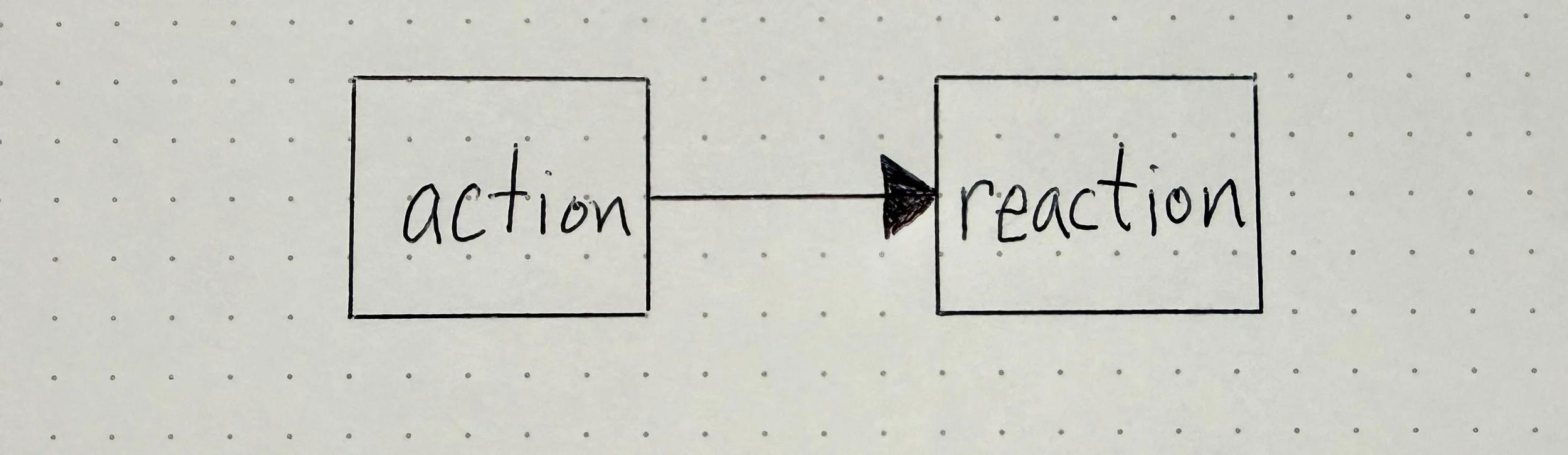
Map 1. Basic Relationship map. Relationships are interactions. Every Relationship is comprised of 2 elements, action & reaction. Changing perspectives on this map could change what we see; the arrow might go both ways, or switch directions. Reality is complex. While we cannot ever map everything, we can be explicit and accurate about the organization and information which improves our mental model’s alignment with reality.
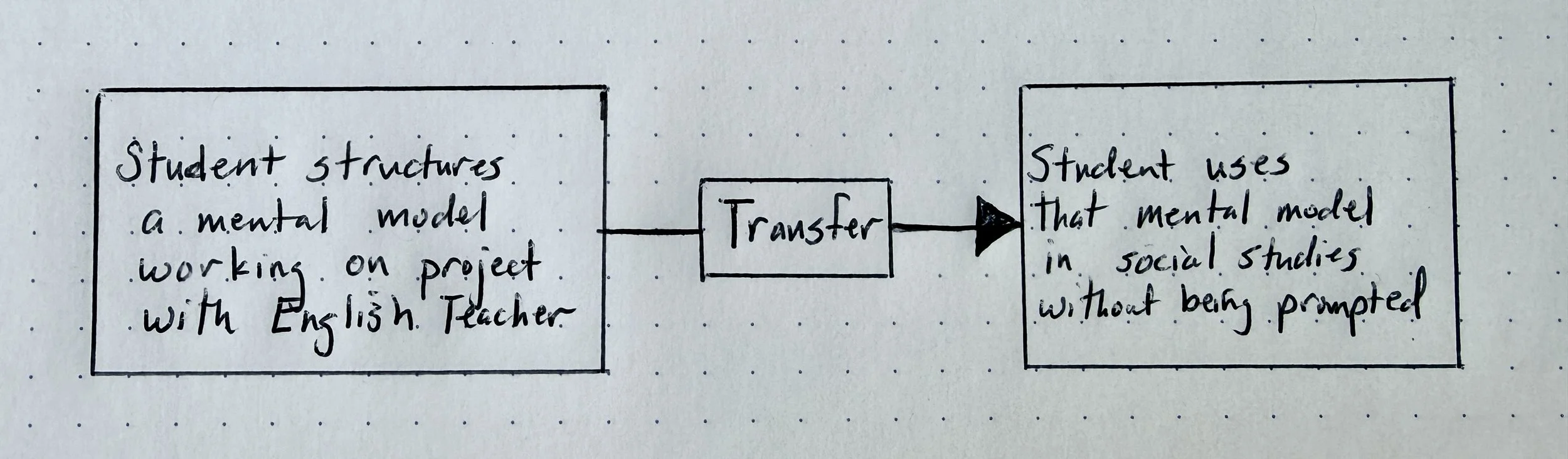
Map 2. My Humanities partner and I were looking for student learning to transfer. Transfer is a Relationship between prior learning (action) and new learning (reaction).
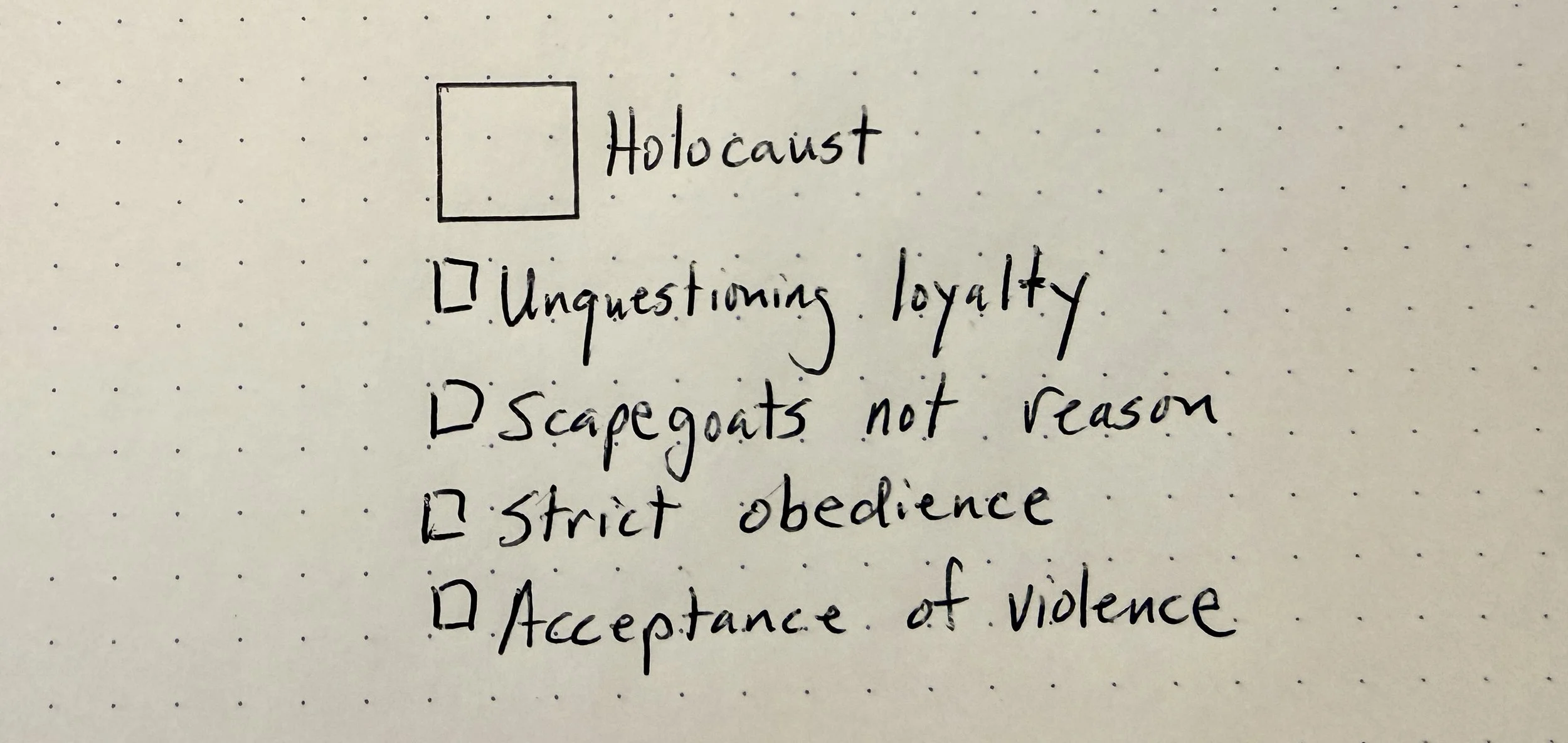
Map 3. Our informal discussion in this example was basically a small group Systems Zoom in Move; we took a whole (Holocaust) and broke it into parts.
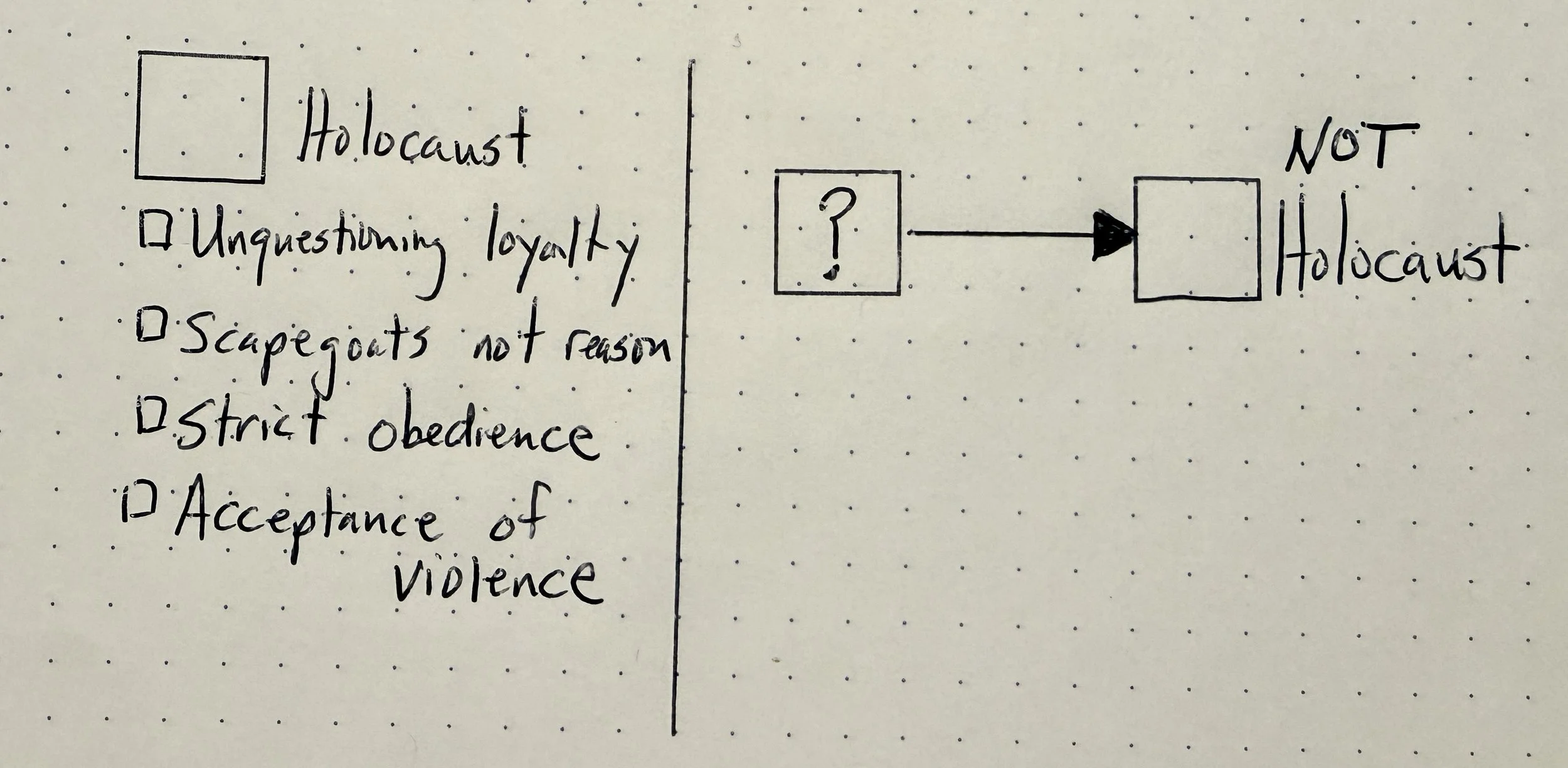
Map 4. Here, I’m mapping my question for Ian. The discussion was a system made of parts, I mixed the System with a Dio List Move, making the system the identity. All identities have an other, so I matched this other as an action-reaction Relationship. In later posts, I will describe this more precisely using DSRP dynamics.
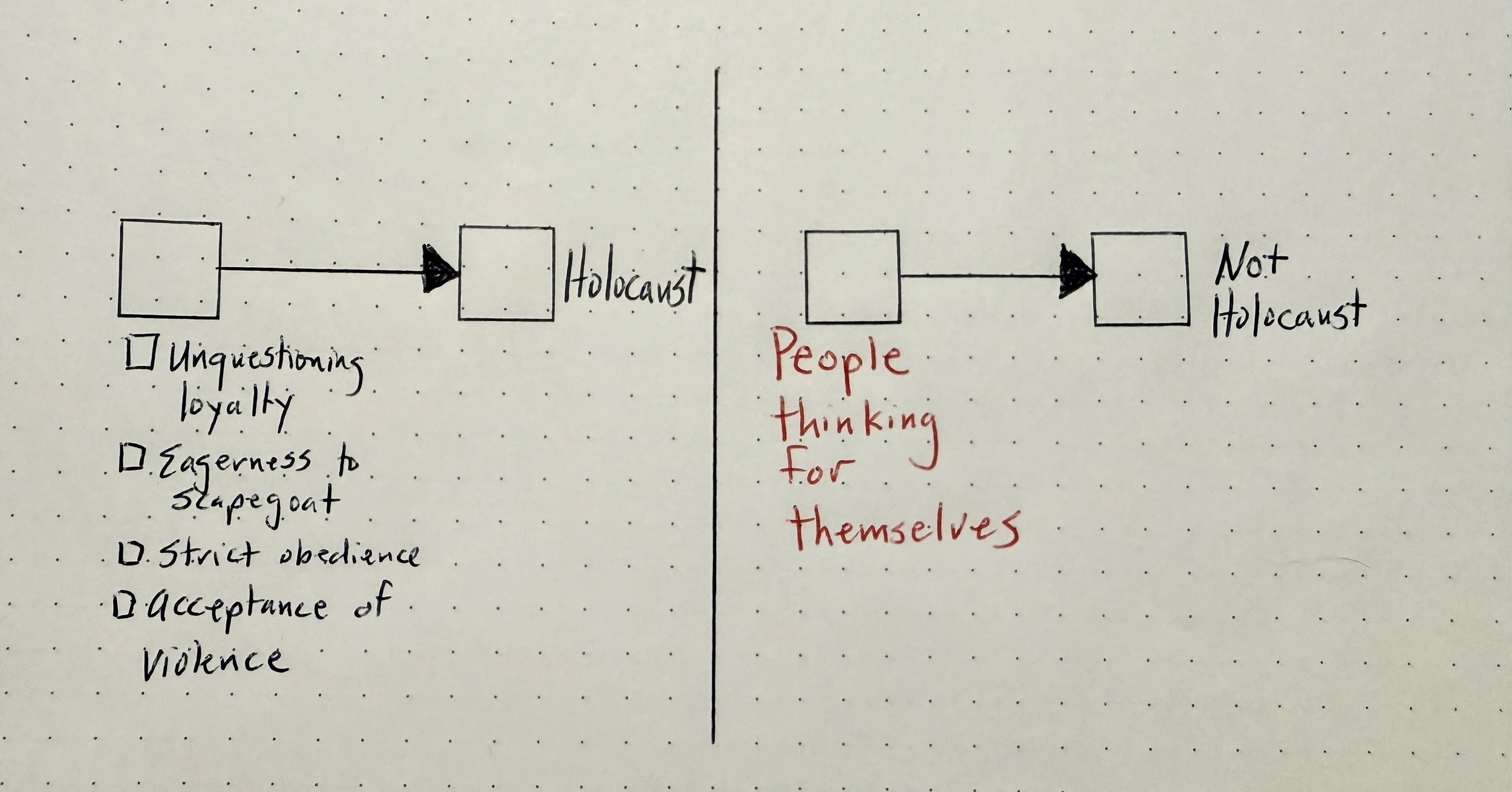
Map 5. Here’s my map of Ian’s response. He used the parts from the system discussion as actions for the reaction, Holocaust. This made it easy for him to recognize information that was an anti-cause to Holocaust, or a cause to Not Holocaust. His response struck me to the ground that day. Because he answered so quickly, I suspect he’d already organized this mental model long before I asked the question.
Some of My Updates Since
Because Ian’s response to my question that day was such a big moment for me, the models I considered sharing in this updates section were all pretty complex. I decided that I’d rather Ian’s idea linger center stage. While it does, I’m going to work a short tangent.
I needed a lot of mentors and experiences to know what to do with the words, “That’s easy Hathaway, everyone thinks for themselves.” Right now, I’m wondering again how many moments like this I just plain missed in the first 14 years I taught. Thankfully, I know I’ve missed a lot fewer since.
Thirty years ago while I was student teaching, my teaching mentor Rome was fond of the aphorism, “The years teach you much, which the days never know.” He used it to encourage me when some aspect of my teaching missed the mark and I was struggling to figure out why. I still talk to Rome regularly. He has taught and collaborated with me so much, on so many projects over the years. I’m grateful beyond words. In a recent conversation I told him this particular aphorism needed an update. Once you start practicing Systems thinking using DSRP-483, you can say, “The years teach you much, which the days barely know.”
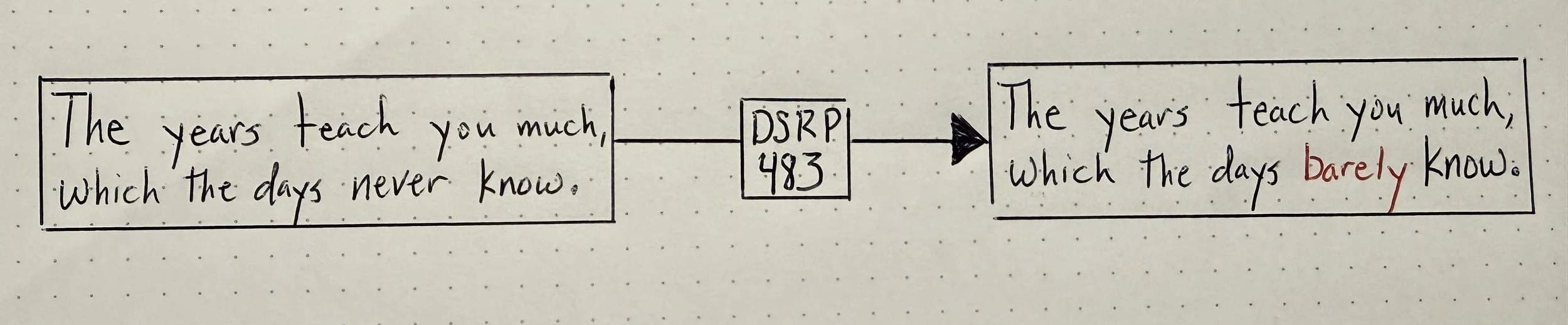
Map 6. Using DSRP makes you a little more aware each day. This allows you to connect at least 1 or 2 more important dots a day than without DSRP. The added awareness and the couple extra dots compound to much, in much less time.
This feels like enough. Another post in a few weeks. In the meantime, I’ll be practicing and rooting for ya.
Additional Research / Sources
From One Cause to Webs of Causality - Journal Article
Zoom in Move- YouTube video
Dio List Move- YouTube Video
Note: This was the same student from an earlier post. Though of course Ian isn’t the actual name.